Action RPG
Beast of Reincarnation's 7 Gameplay Systems: Punishment, Strategy, and Stumbles
Game Freak's action RPG blends Taurus-driven chase mechanics, turn-based Bloom Arts, and deep buildcrafting, with linear maps hiding surprises and the first hours testing your resolve, all undercut by technical hiccups.
Taurus Teaches You to Chase — Then Punishes You for It
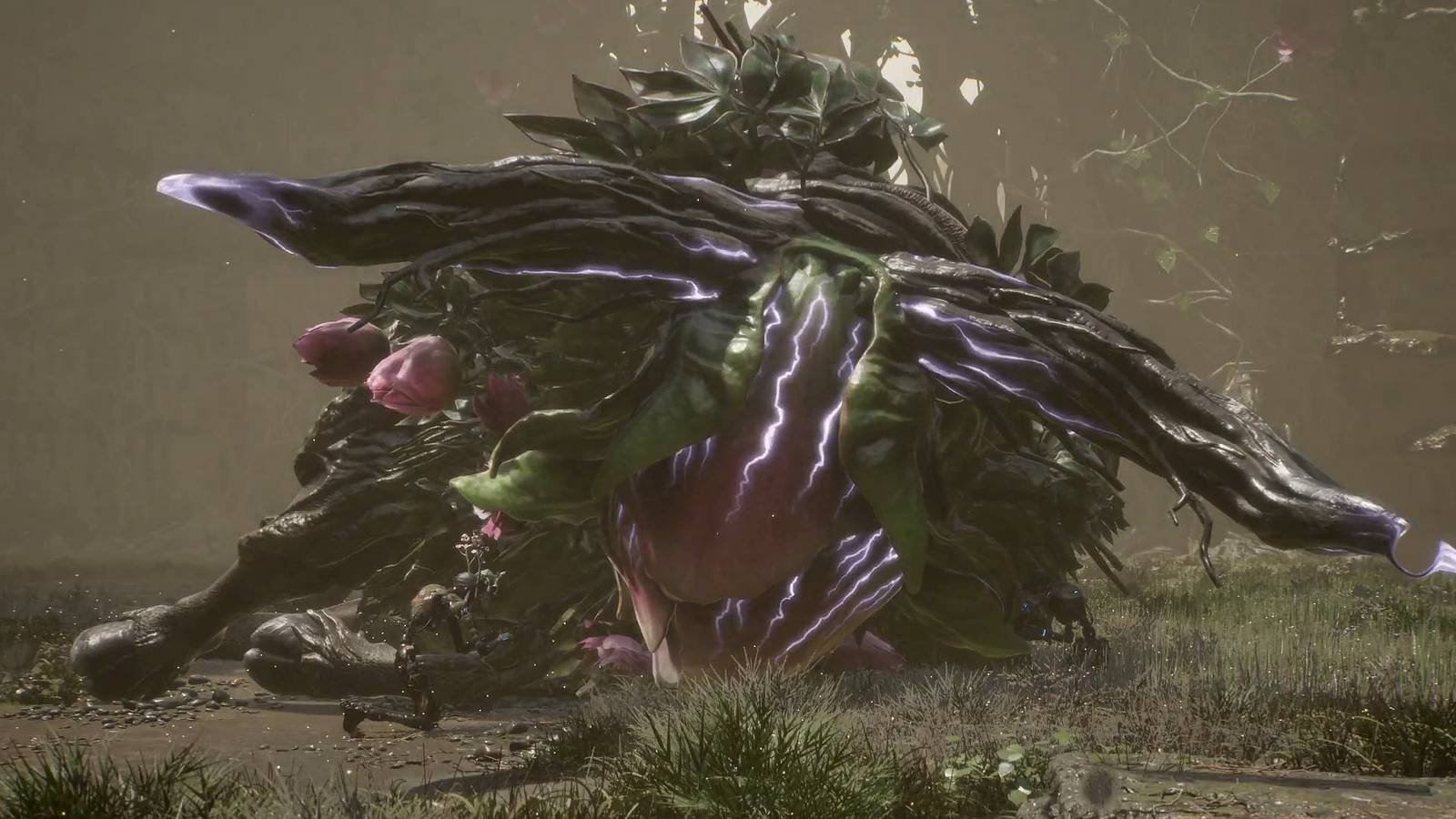
The bull-like Nushi called Taurus is among the earliest major bosses, and its defining behavior is fleeing. After absorbing a few hits, Taurus bolts across the arena, firing three projectiles mid-sprint and clipping you with a horn swipe as it disengages. Closing the gap efficiently is the core challenge. Koo's Javelin ability skewers Taurus with a spike you can grapple onto for instant re-engagement, though its cooldown prevents spamming — a bind ability on Koo should fill the gaps between Javelin uses. The fight's biggest punish window arrives when Taurus sprouts a large spike on its forehead and charges: wait for the visual flash, dodge immediately (the timing is forgiving), and Taurus stands stunned long enough for a full combo. In phase two, Taurus glows red and chains five hits — dodge the first four, then watch for the left horn plowing into dirt before parrying the final charge.
Bloom Arts Turn Real-Time Action Into a Turn-Based Decision
Pressing Triangle or Y during combat freezes the action into a slow-motion command menu where you select Koo's Bloom Arts — special attacks with properties ranging from elemental damage to area-of-effect status afflictions. This hybrid system, reminiscent of Final Fantasy VII Remake's ATB gauge mechanic, sits inside what is otherwise a Sekiro-adjacent action game. The result is a combat cadence with two distinct speeds: the real-time parry-and-attack flow, and the tactical pause where you evaluate which Bloom Art best exploits the current situation. As the skill tree expands, the most effective picks for a fight like Taurus are Koo's Javelin — a spike that pins the boss and lets Emma grapple back into melee range — and a binding ability that locks the target in place. Both cost FP and cycle through cooldowns, so the player rotates between them rather than relying on one. The special ability triggered by pressing both thumbsticks then capitalizes on the openings those Arts create.
Spirit Stones and Sword Passives Define Your Playstyle
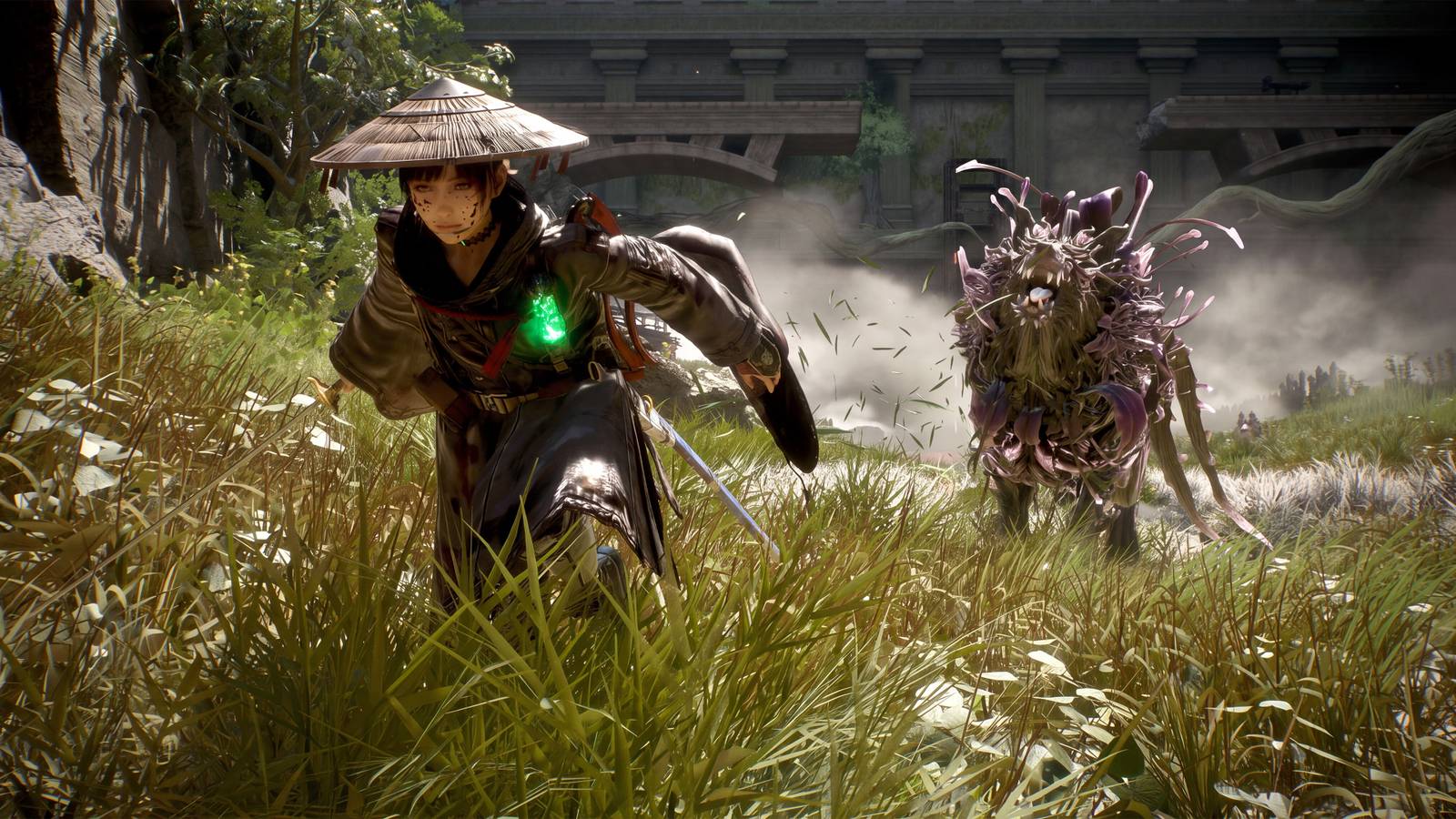
Emma's two primary customization axes are her swords and Spirit Stones, and their interaction creates meaningfully different combat identities. Every sword carries a passive effect triggered by successful parries — elemental infusions, projectile generation, and other on-deflect bonuses. Spirit Stones slot in as broader modifiers, ranging from flat attack and defense boosts to nuanced effects like a chance to restore Koo's FP when striking an enemy weakness with a ranged weapon, or a permanent increase to the starting Entanglement Gauge, the stamina pool that governs blocking and finisher execution. Because sword effects activate on parry and Spirit Stones modify broader combat behavior, the two systems amplify each other: a player stacking FP-regeneration Spirit Stones with a parry-triggered elemental sword creates a loop where every deflection feeds both damage and resource generation. Another player might prioritize Entanglement Gauge expansion for a more aggressive finisher-heavy approach. The systems are designed so that synergy, not raw power, determines effectiveness.
Every Nushi You Kill Unlocks Combo Strings You Can't Get Anywhere Else
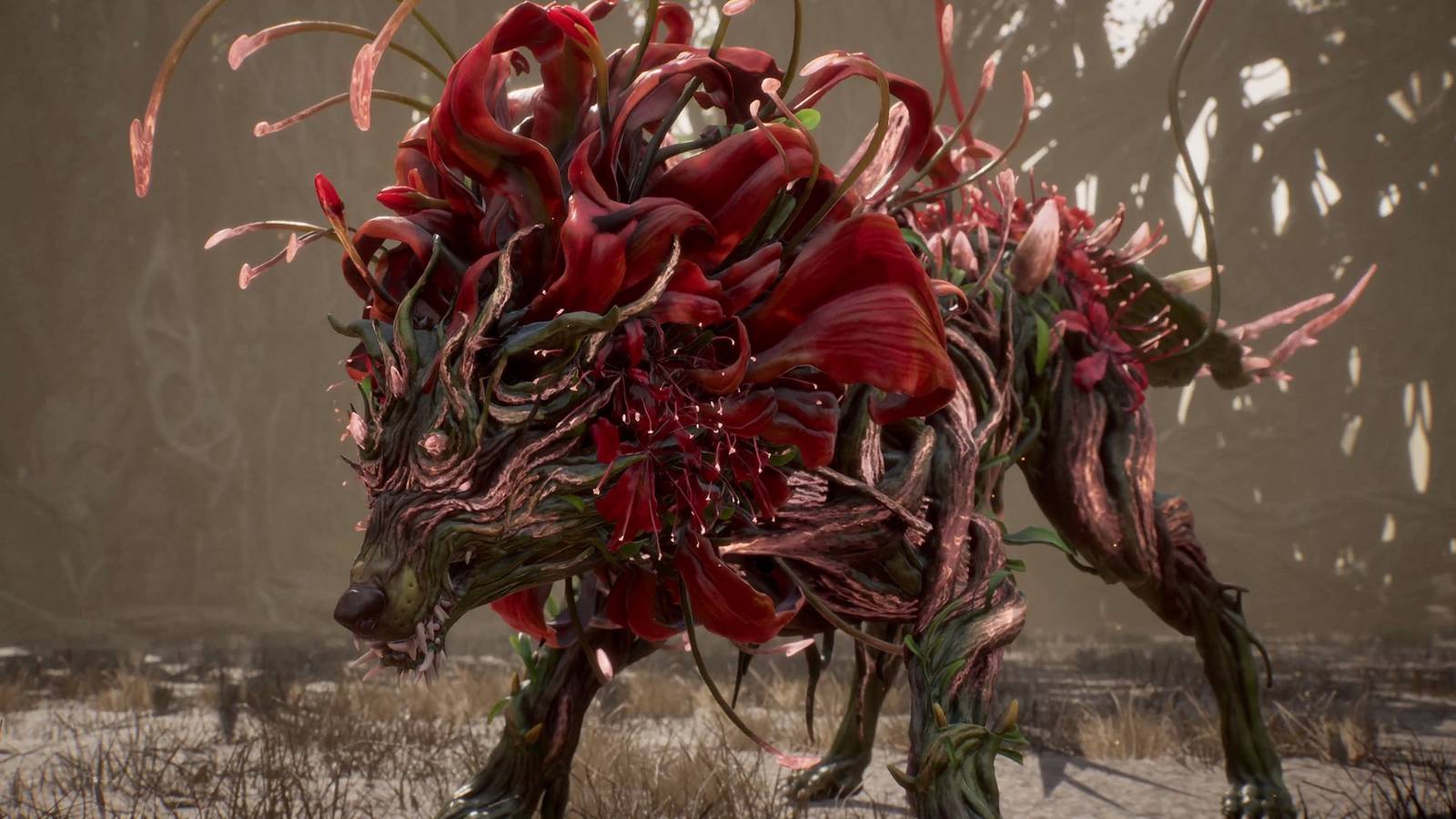
Each Nushi — the towering boss creatures scattered throughout the game's chapters — is a progression gate disguised as a combat challenge. Beat one, and Emma absorbs new attack strings and finishers with varied areas of effect, while Koo gains additional Bloom Arts. This snowball design means the combat palette available by the second encounter bears little resemblance to the first. Early on, Emma wields a single combo chain with noticeable attack delay and a dodge carrying significant end-lag. By mid-game, Nushi Skills weave into standard combos, grapple points generated mid-fight allow slam-downs and aerial shots, and ranged weapons like the crossbow — whose bolts ricochet between clustered enemies — add a dimension absent from the opening hours. Defeating Nushi also grants the special ability triggered by pressing both thumbsticks, a powerful finisher worth saving for boss punish windows. The first Nushi encounter feels constrained and deliberate; the final ones demand mastery of an exponentially expanded toolkit.
The Linear Maps Hide More Than the Critical Path Suggests
Beast of Reincarnation abandons open-world design for linear, mid-sized regions, but each one opens vertically in ways that reward mastery of Emma's movement abilities. Optional areas branch off the critical path with meaningful loot: items that increase maximum Stim Packs, strongboxes, and seedlings for the Cleanse Walker's small greenhouse, where Kagura cooks meals that boost stats for both Emma and Koo. The Ogouchi region presents a Japanese countryside of rice fields and wreckage, while the Kanto region features a massive valley descending into underground networks with waterfalls and ruined infrastructure. Koo alerts you to nearby valuables during exploration, creating an organic incentive to stray from the main route — a strongbox leads to an enemy camp, which leads to a Keeper Golem offering seedling locations, each discovery chaining into the next. Later chapters narrow the focus toward more directed layouts, making those first few open regions the highlight of the game's environmental design.
The First Five Hours Will Test Your Commitment
Beast of Reincarnation's opening stretch undersells what the game eventually becomes. Emma starts with a single combo string, attacks carry more delay than feels natural, the dodge has minimal invincibility frames with significant end-lag, and the parry window's generosity paradoxically undermines confidence in the mechanic. Koo's Bloom Arts — the game's most distinctive system — feel limited when you possess only a handful of options and barely enough FP to use them. The inflection point arrives when the first Nushi falls: new combo strings, Bloom Arts, and Nushi Skills unlock simultaneously, and the combat rhythm transforms from cautious and plodding to fluid and purposeful. The roughly 30-hour journey's pacing tightens from there, offering new mysteries and mechanical rewards in every chapter. Players who disengage during those opening hours miss the exponential expansion that defines the rest of the experience and makes the early clunkiness feel like a deliberate onboarding curve.
Technical Stutters and Camera Issues Undermine the Polish
Performance inconsistencies surface across both PC and console. On a system equipped with an i7-13700F and RTX 4080 running at 4K with DLSS Balanced, benchmarks recorded 96 FPS average with a 53 FPS 1% low — smooth enough in isolation, but traversal stutters persist during grapple-launches and rapid movement. Shader compilation stutters appeared only on first boot. The game also reverts to AMD FSR 1 on every relaunch when DLSS is selected, with nearly indistinguishable image quality between upscaler modes. On base PS5 in Performance Mode, frame rate holds near 60 FPS but drops noticeably in areas with heavy water rendering, dynamic lighting, and shadow effects. Foliage pop-in affects both platforms. In tighter combat arenas — particularly against large Nushi whose models fill the screen — the camera clips through enemy geometry and swings erratically.
Source material: hardcoregamer.com — this piece is based on that published source material.