Mobile Gaming
Ustwo Left Mobile Behind — And Lords of the Fallen Is Finally Worth Playing
The studio behind Monument Valley explains why free-to-play pushed it toward PC, while a once-rough soulslike gets a second life on PS Plus.
Why did Ustwo Games abandon mobile development?
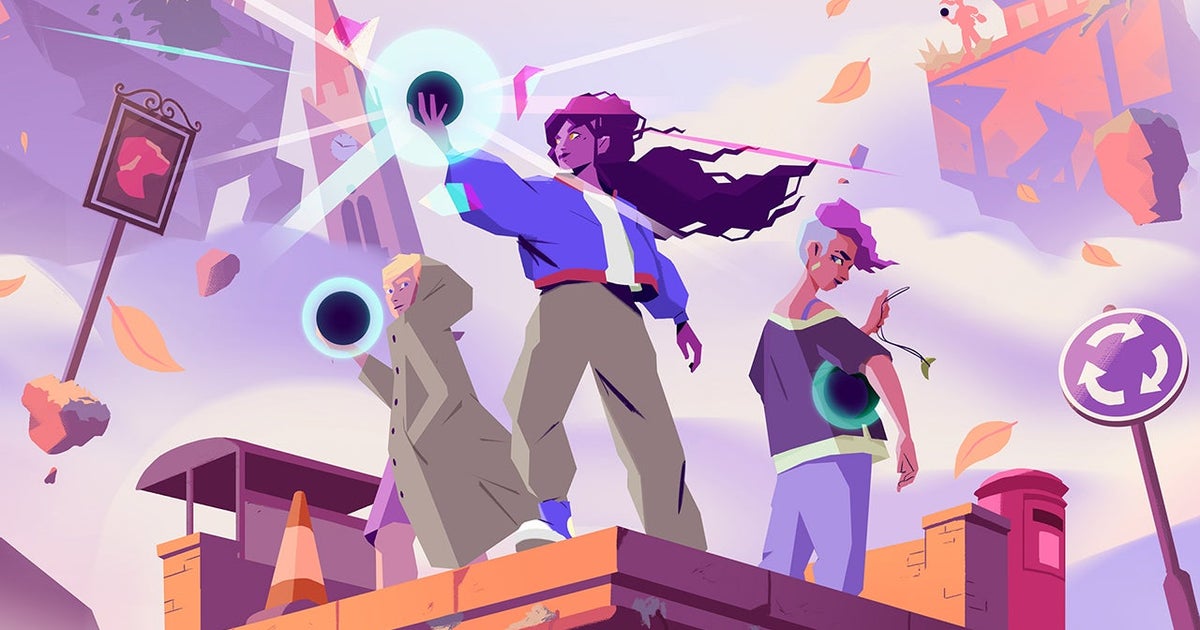
The studio behind Monument Valley found premium mobile games financially unsustainable. CEO Maria Sayans told Develop 2025 that Ustwo carries per-employee costs comparable to AAA developers, while the mobile market increasingly demanded free-to-play titles with long retention cycles. Platform holders pushed for that model directly. "They wanted to make games that had more retention and lasted longer," Sayans said. "We'll never be good at that. It's so against our DNA." She added that the barriers to succeeding in free-to-play are "really, really high," making it a non-starter even had the studio wanted to pursue it. Chief creative officer Daniel Gray said he had spent a decade hoping mobile would embrace artistic interactive media — "I was full of positivity then that the mobile industry was going to go, 'No, people are going to read short stories and play interactive media on their phone as a wholesome form of entertainment.'" That hope did not materialise. "I want to tell stories. I want to do finite things. I want to focus on polish rather than extensive gameplay," he said. The studio laid off four of its 30 employees this year, its first-ever redundancies, and shifted to hiring contractors to reduce costs.
What games is Ustwo developing for PC?
Ustwo has three PC-first titles in active development, though none have shipped yet. The studio has not disclosed specific details about these projects. Its transition began with Assemble with Care, its first PC release, and continued through Alba: A Wildlife Adventure — which Gray said was the first time the team felt like "we were making a real video game." The studio also released Desta: The Memories Between, a turn-based tactics and sports hybrid that Pashley described as an attempt to "make a game that was fully mobile but also for PC." Gray admitted Desta "didn't necessarily work out" given its underwhelming sales, partly because the studio had to accommodate two very different sets of players. Going forward, Gray said the studio will maintain "mechanics that are very tactile, quick to understand, and incredibly satisfying" — "a lot of what we do transitions over." He also emphasised drawing on the life experiences and interests of the people making each game, "allowing a game to feel genuine." Pashley said the studio is now focused entirely on PC: "We need to make sure we have a clear vision of the people playing the game and make the game for them."
What makes Lords of the Fallen's dual-world mechanic work?
Players carry an umbral lamp that lets them switch between Axiom, the land of the living, and Umbral, the land of the dead, at will. This isn't a gimmick bolted onto combat — it shapes exploration, puzzle-solving, and enemy encounters throughout Mournstead. The lamp reveals hidden paths, lets you soulflay spectral enemies, and collect additional loot in the Umbral realm. It also functions as a narrative device: the lamp is both gift and curse, a corrupting force that seduces the bearer toward its own agenda. Past lampbearers appear as bosses, and their fates illustrate what happens when the temptation wins. The mechanic creates a constant decision loop about when to shift worlds and how long to stay in the more dangerous Umbral layer.
Is Lords of the Fallen worth playing in 2026?
The 2.0 update released in April 2025 overhauled the experience significantly. Developer Hexworks smoothed combat, improved lock-on mechanics, optimised performance and frame rates, and adjusted enemy spawn locations. The game sold 2.5 million copies and broke even in February 2026, with many players who abandoned the original launch returning to find a substantially improved version. The Metacritic score sits at 75. Two persistent criticisms remain: area layouts are large and convoluted with sparse checkpoints and long runbacks, and some boss fights rely on gimmicks like lamp-based parasite destruction or summoning minion adds. Later bosses also reappear as regular enemies, which some players find deflating. The game requires a PS5 and takes up 35 GB of storage. The core gameplay loop involves navigating these sprawling, interconnected maps that favour careful exploration over speed. A player must commit to learning the layout and enemy patterns, as the design expects patience with long paths between checkpoints and boss attempts. Whether this structure feels like a rewarding challenge or a frustrating slog depends entirely on your tolerance for that specific kind of methodical, sometimes punishing, progression.
How is the mobile development mindset entering PC gaming?
Outfit7, the studio behind the Talking Tom franchise with over 26 billion downloads, now applies its mobile testing methodology to PC. The company set up two small internal developer cells with full ownership over their projects, releasing Vampirio on Steam in April and Liminal Logistics in June. COO Jernej Česen said Outfit7 validates PC projects at milestone gates using the same audience-driven testing and rapid idea rejection that became standard in mobile. "We know that if you are setting the trends or you are the first adopter, then you can get something out of it," Česen said, calling diversification the key to the industry. "If you are not exploring, you are standing still." The developers within those cells pitch their own games and take ownership over execution, with the company checking progress against KPIs at each milestone. That mobile-first methodology — rigorous early testing followed by swift rejection of ideas that fail to land — is also being adopted by PC and console firms like Avalanche Studios. Even Ustwo's Daniel Gray acknowledged this convergence, noting that platform holders across all platforms now push for longer retention and sustained engagement — the very pressures that drove Ustwo away from mobile in the first place.
What are Lords of the Fallen's biggest design problems?
The fact that Hexworks left both the boss-fight structure and the area layouts untouched in the 2.0 update signals that the studio views them as intentional design choices rather than oversights. The sprawling, interconnected maps are built to reward patient exploration, with branching paths offering different routes through each area and a rhythm that favours cautious, methodical progression over speed. For players willing to adopt that mindset, the long runbacks become part of the experience rather than a punishment. Whether these philosophies click for you depends on your tolerance for unconventional challenge and your willingness to learn systems that can feel opaque at first. This design creates a specific gameplay mechanism where success is tied to memorisation and spatial awareness rather than fast reflexes alone. In practice, a run back to a boss is not just a penalty but a chance to practice enemy encounters and find shortcuts. A reader considering the game should ask if they enjoy dissecting complex level architecture over time, or if they prefer more direct, linear challenges.
What did Ustwo learn from its failed experiments?
Before committing to PC-first, Ustwo tested three ideas in genres it had never attempted before. Sayans said the experimentation taught the team what it could do and set up the transition. Desta was the most instructive failure — a hybrid of turn-based tactics and sports designed to serve both mobile and PC audiences simultaneously. The studio discovered it couldn't serve both markets in a single product. "Being trapped between those two audiences, we started going further down a path of thinking about what it would be like if we built stuff for PC and console from scratch," Gray said. Chief development officer Peter Pashley confirmed the studio now makes games with a specific player in mind rather than trying to bridge platforms.
Why did Lords of the Fallen succeed despite its rough launch?
The game sold one million copies within ten days of its October 2023 release despite widespread bugs, frame rate issues, aggressive enemy spawning, and poor lock-on mechanics. Hexworks used that early sales momentum and direct player feedback to fund and develop a significant update over roughly eighteen months. The revised version addressed the technical problems and rebalanced encounters, bringing back lapsed players and attracting new ones. That second wave pushed total sales to 2.5 million copies and allowed the studio to break even by February 2026, freeing resources for the sequel planned for release later this year. The mechanism for this turnaround was a direct feedback loop between sales data and development resources. The initial commercial success provided the financial runway to support the large-scale 2.0 overhaul. In practice, the studio listened to the community's complaints about core systems like combat and lock-on, then dedicated significant effort to fixing them. A reader can see this as a case where an early audience, despite a flawed product, provided the validation and funds needed for the developer to deliver the game originally envisioned.
Source material: gamesindustry.biz — this piece is based on that published source material.