Steins;Gate
Steins;Gate RE:BOOT Remakes Its Past Without Erasing Its Pain
The Gamma Worldline, E-mote subtlety, Takeshi Abo's shadowing score, and Miyano's returning voice all serve one goal: making the tragedy heavier, not easier.
The Gamma Worldline Finally Gets Its Due
Steins;Gate RE:BOOT adds a new Gamma Worldline that does not retread existing routes. For players who have memorized the Alpha and Beta timelines, this is the missing chapter—a separate line where Okabe Rintaro's choices lead to outcomes never seen in the original release or in Steins;Gate Elite. The original never dramatized this branch, and RE:BOOT treats it as a genuine expansion rather than a bonus scene. It lands mid-game and recontextualizes earlier conversations, particularly the casual hints dropped by Suzuha and the unguarded moments with Moeka. Returning players will catch details that read as pure foreshadowing on a second pass. The new content does not overwrite the original endings; it sits alongside them, giving veterans a reason to open the PhoneWave again without feeling like they are replaying the same script.
E-mote Brings the Lab Members to Life
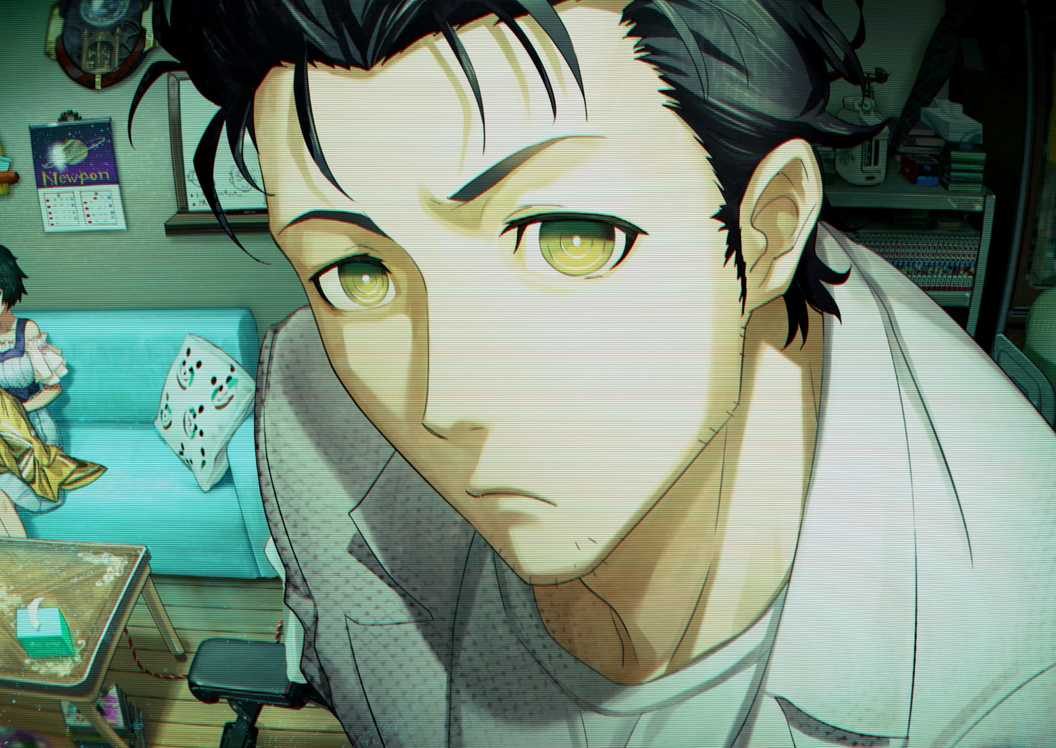
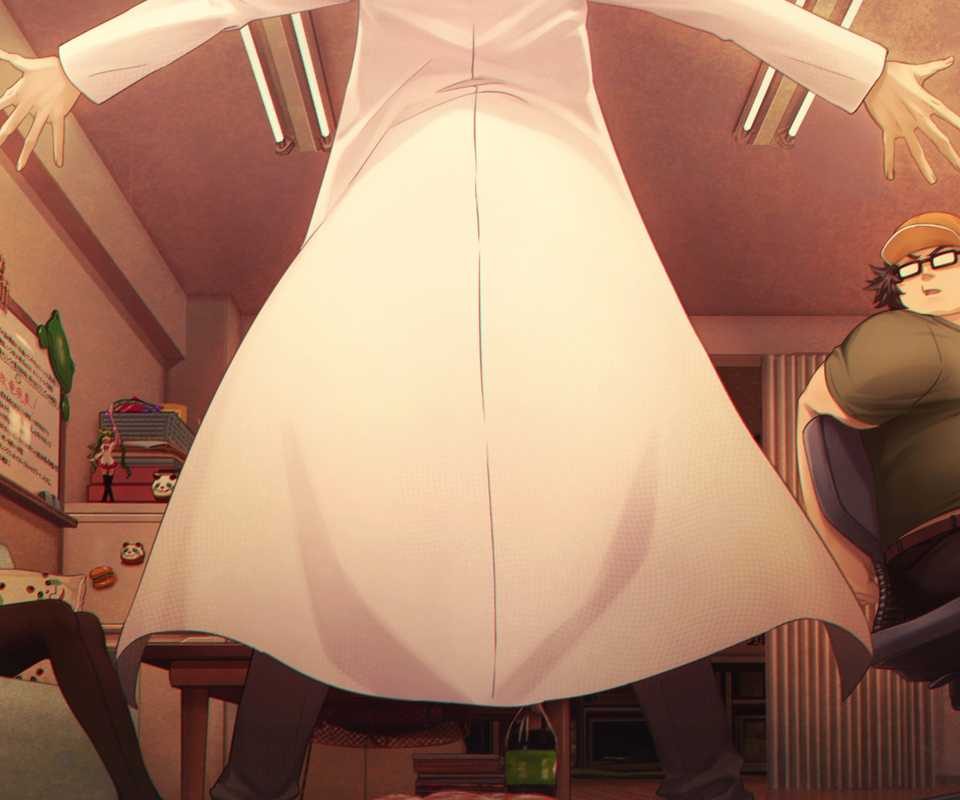
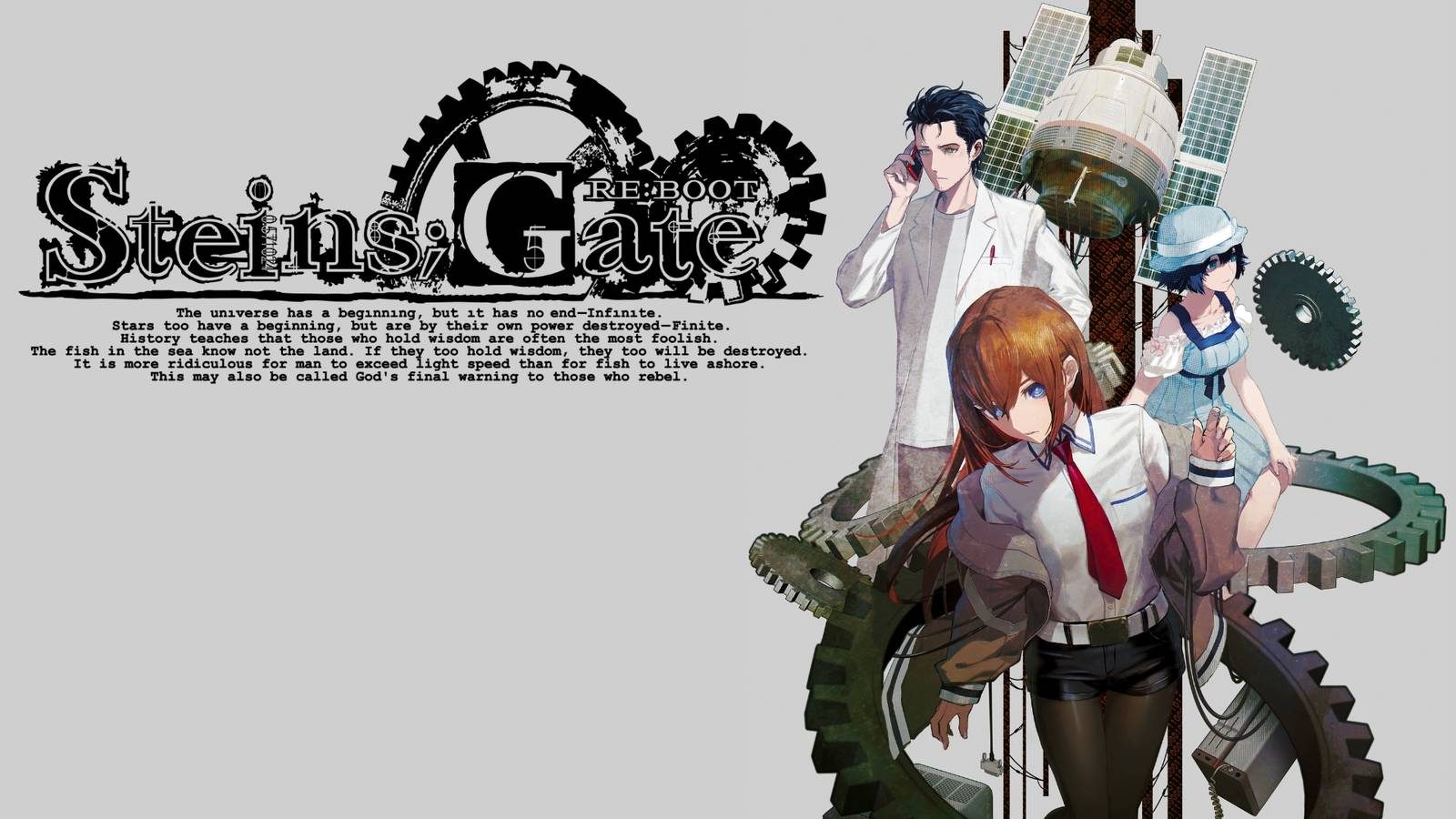
The original visual novel used static sprites. RE:BOOT replaces them with E-mote, a Live 2D-style animation tool that gives each character subtle breathing, blinking, and posture shifts. The movements are minor and never distract from the dialogue; they complement the text like a quiet stage director. Huke, the original character designer, handcrafted the updated models, and his touch is evident in every adjusted contour. Mayuri Shiina and Moeka Kiryu benefit most—their redesigns sharpen the original linework while keeping the same personalities. The Future Gadget Lab's background, however, loses some of its cluttered warmth; the new version looks cleaner but less lived-in. That trade-off is the one visual decision veterans may debate. Still, watching Okabe's smirk flicker during a monologue makes the static panels of the original feel archaic. In practice, the e-mote system renders continuous motion rather than fixed poses: a character's shoulders rise and fall with each breath, her gaze drifts toward the speaker, and his fingers tap on a desk during a tense pause. These micro-gestures are calibrated to the audio track, so a raised eyebrow lands exactly at the moment a line is delivered. The player doesn't need to click or adjust anything; the animations simply make long reading sessions feel more like watching a performance. For anyone coming from the original, the difference is immediate—text that once required imagination now carries its own physical life.
The Slow Opening No Longer Feels Like a Chore
A common criticism of the original Steins;Gate was its deliberate first few hours spent on mundane lab experiments. RE:BOOT rebalances those scenes without cutting the character-building conversations. Scenes flow more naturally because the script tightens redundant exchanges and lets the camera linger on expressions that the E-mote animations now support. The payoff is the same: a gradual escalation from harmless phone-wave tests to the first D-mail revelation, but the journey feels less like waiting for the plot to show up. The opening chapters still force players to live with Okabe's theatrics and the lab members' idle chatter, yet the remastered pacing makes every exchange feel purposeful. For instance, a scene of Mayuri adjusting her watch now carries a subtle premonition that becomes obvious only on a second playthrough. Newcomers will have an easier time trusting the story's patience, and veterans will recognize the original's structure while appreciating the smoother transitions between comedy and dread. The increased density of character moments means the emotional fallout later hits with greater weight, because the player has spent more time in these people's lives without realizing how much they've come to care.
Takeshi Abo's New Score Shadows Every Leap
Series composer Takeshi Abo returned to recompose the entire soundtrack for RE:BOOT. The haunting sound effects that once punctuated the original's most unnerving moments now hit harder—the whir of the PhoneWave and the distorted static of incoming D-mails feel more textured. Abo's new cues are placed to support the narrative's emotional cycles: light-hearted banter between Kurisu and Okabe gets a playful motif that later turns dissonant when the story spirals. The title track builds to a crescendo exactly where the game expects you to lose your bearings. For longtime fans, hearing Abo's work in higher fidelity is reason enough to replay, and the increased clarity reveals counter-melodies that were previously buried under the original's mix. The subtle layering of these sounds makes the transition from comedy to dread feel like a physical shift in the room. By the time the story reaches its crucial D-mail moment, the music has already primed your nerves, so the shock lands with full force.
Mamoru Miyano Still Owns the Role
RE:BOOT ships with a Japanese-only voice track, just like the original and Elite. That means English dub fans of J. Michael Tatum's Okabe are out of luck again. But the trade-off is Mamoru Miyano's performance, which remains one of the most charismatic in the medium. Miyano's Okabe shifts from theatrical mad-scientist cackling to quiet despair without losing continuity. The rest of the cast—Kana Hanazawa as Mayuri, Asami Imai as Kurisu, and Tomokazu Seki as Daru—reprise their roles with the same intensity that defined the original release. The voice direction matches the E-mote facial cues, so a raised eyebrow or a paused breath lands exactly where Miyano's delivery expects it. Listeners will notice how Miyano modulates his pitch during long monologues, starting at a booming declaration and gradually dropping to a whisper as the weight of a revelation settles in. The other actors similarly adjust their timing to the character's on-screen animations, allowing for natural overlaps in banter. For players who cannot understand Japanese, the subtitles capture the tone, but the emotional nuance comes through in the vocal inflections alone. This is a showcase of voice acting that elevates even the most exposition-heavy scenes.
The Emotional Weight of Every Leap
Steins;Gate has never treated time travel as a simple plot device. RE:BOOT reinforces that by making each D-mail and Time Leap cost something. When Kurisu explains the Time Leap phenomenon to Okabe, she condenses the physics into digestible terms without dumbing it down—the player understands the memory-transfer limit and its risk. The scientific jargon remains dense, but it serves the story's emotional core. The game repeatedly shows that altering the past never erases the pain; it just moves it. That lesson lands hardest in the mid-game scenes involving Mayuri, whose fate forces Okabe to choose between his own sanity and her life. The remake's pacing gives those scenes more room to breathe, so the despair feels earned rather than melodramatic.
Phone Trigger and Tips: The Mechanics That Ground the Madness
RE:BOOT keeps the classic interaction systems from the original visual novel. The Phone Trigger lets you call or text side characters, and your choices determine whether their short arcs resolve or remain stuck. The Tips system provides brief definitions for terms like 'D-mail' and 'worldline'—useful for newcomers drowning in jargon. Both systems are streamlined compared to the original, with less menu friction and clearer feedback when you select the correct response. They serve as the player's only control over the branching narrative, so getting them right matters. The game never punishes you for a wrong pick; instead, it locks you into a different route that still feels complete. Those systems are what make the remake an interactive experience rather than a passive cutscene.
Banter That Makes the Tragedy Hurt
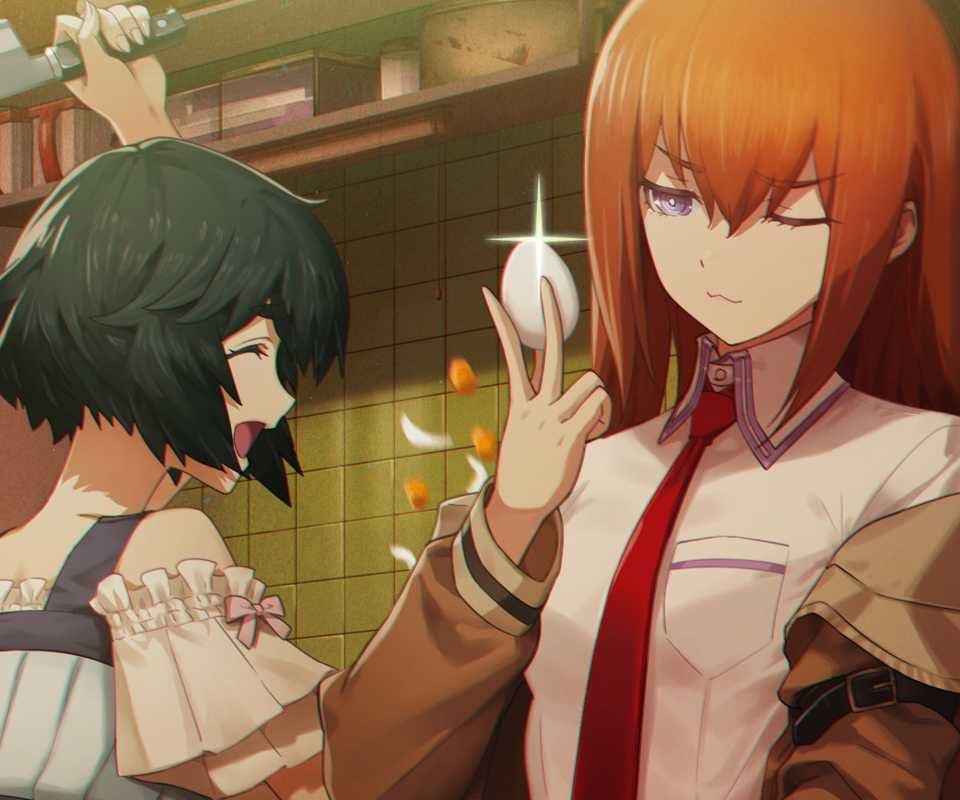
The chemistry between Kurisu and Okabe is the engine of Steins;Gate's emotional success. RE:BOOT preserves the rapid-fire insults and playful teasing, then twists them in the later chapters when the story turns cruel. One minute you're laughing at Okabe's grandiose declarations; the next you're watching him break down over a D-mail that never should have been sent. The script's ability to switch tone without whiplash is the reason the game's despair moments work. It also helps that the E-mote animations give the characters micro-expressions that match the dialogue—Kurisu's resigned sigh, Mayuri's innocent confusion—so the lighter scenes feel lived-in. The banter gains rhythm from the voice actors' timing and the characters' animated reactions: Okabe's arms gesture wildly during a rant, Kurisu tilts her head in mock disbelief, and the pauses between them are filled with meaningful stares. These small interactions make the later tragedy cut deeper, because you have witnessed the ease with which they used to relate to each other. That foundation makes the gut-punching revelations more effective, because you care about these people as people, not just plot devices.
Source material: dualshockers.com — this piece is based on that published source material.
Images